
Walkways That Make Your Yard Easier To Use Every Day
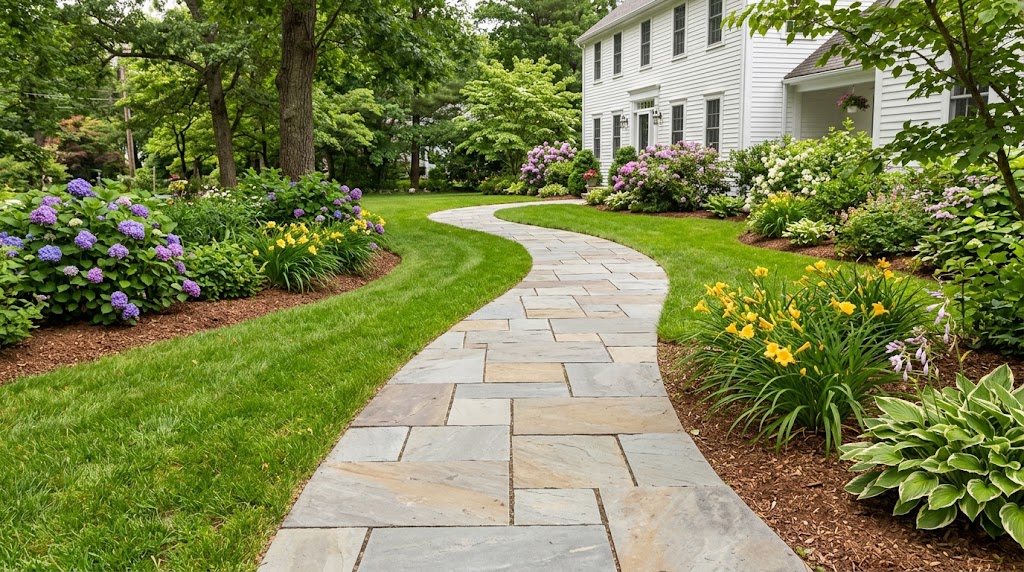
A good path saves you from muddy shoes, awkward shortcuts, and worn-out grass near the gate. It also gives your yard a sense of order, helping every outdoor area feel connected. Custom walkways can turn a simple route from the driveway to the front door into an attractive part of your home.
Why Walkways Matter More Than You Think
Most homeowners do not notice their paths until they become a problem. Maybe guests cut across the lawn because the front entry feels disconnected. Maybe the side yard becomes slippery after rain, leaving everyone to tiptoe past the trash bins.
Walkways solve those everyday annoyances with a surface designed for real traffic. They guide people from one area to another without trampling grass or tracking dirt indoors. Once the route is right, you stop thinking about it, which is usually the mark of a well-planned feature.
We design paths around where people already walk, not where a sketch says they should walk. That approach avoids those lonely paths nobody uses because they take the long way around. A walkway should follow the natural rhythm of the property and serve a real purpose.
A front walkway can make guests feel welcomed before they reach the door. A side-yard path can turn a cramped utility route into a clean, usable space. A backyard path can connect a patio with a garden, fire feature, or seating area without turning the lawn into a worn track.
Walkways That Match Your Home
The material and shape of your path set the mood for the whole area. A straight paver path can feel crisp beside a modern home. A gently curved stone route may work better around mature landscaping or a cottage-style yard.
We look at the existing exterior finishes before narrowing down the design. The roof color, front door, driveway, and nearby planting beds all help guide the material selection. Nothing needs to match perfectly, but the elements should feel like they belong together.
Pavers offer plenty of options without making decisions feel overwhelming. Concrete pavers can provide a neat, durable surface in several colors and shapes. Brick gives a familiar, welcoming character, while natural stone brings in texture that works well with organic landscape designs.
For front-yard paths, a border can help create a more polished finish. A darker edge around lighter field pavers adds definition and directs the eye toward the entry. In backyards, a simple layout can let gardens and outdoor furniture take center stage.
You can explore our project gallery for examples of paths that complement patios, driveways, and other outdoor features. Looking at completed projects makes it easier to see how a material might look beyond a small sample board.
Walkways Need The Right Width
Width is one of the biggest details in a successful path. A narrow walkway might save space on paper, but it can feel cramped when two people pass each other. It can also make carrying groceries or pulling a garden cart more of a balancing act.
A front entry path often feels most comfortable when it gives visitors enough room to walk side by side. Side-yard routes can be narrower, though they should still allow easy movement around bins, tools, or equipment. Garden paths can have a more relaxed feel if they lead to a bench or planting area.
We review how each path will be used before we settle on dimensions. If you use a wheelchair, stroller, or rolling cooler in the area, that changes the plan. Small choices early in the design can save daily frustration later.
The path should also relate to the scale of the house. A wide, dramatic front walkway can overpower a modest entry. A skinny route leading to a large patio can look like an afterthought. Balance is the goal, and there is no one-size-fits-all measurement.
Walkways And Drainage Work Together
Drainage is not the flashiest part of a hardscape project, but it can make or break the finished work. Water should move away from the home and not settle along the path edges. If it does, the walkway can shift, collect mud, or create a slick surface during wet weather.
We assess the slope before construction begins. A path may need a subtle pitch so rainwater moves toward a planned drainage area. On some properties, nearby downspouts or existing runoff patterns need attention before a new surface goes in.
The base below the pavers matters just as much as the pavers you see. We excavate to the proper depth, add compacted base material, and prepare the surface for long-term support. A level-looking path with a weak base is a little like a nice rug on a sagging floor, it looks fine until it does not.
Well-built walkways can also protect your landscaping. They create a defined route for foot traffic, which keeps soil from compacting near plants. That gives garden beds a cleaner edge and stops people from making their own shortcuts through the yard.
Material Choices For Busy Areas
The best walkway material depends on the location and how often people use it. A front entry takes regular foot traffic and needs a stable, easy-to-clean surface. A poolside route should feel secure under bare feet and work well around splashing water.
Pavers are popular because they offer strong footing and can be repaired in smaller sections. If utility work needs to happen later, pavers can often be removed and reset after the repair. That can save homeowners from staring at a patched concrete scar for years.
Natural stone can be a great fit when the property has a more relaxed landscape style. Stone shapes and textures bring character, though the material needs careful installation to stay stable. Brick can work well near older homes or classic front porches, where it adds warmth without looking forced.
We help homeowners compare materials based on the site, expected maintenance, and the visual style they want. You do not need to become a hardscape expert before calling us. That part is on us.
Where A New Path Helps Most
Some areas of a property benefit from a walkway right away. These locations often see repeated foot traffic or have a problem that gets worse during wet weather.
- A front entry path that connects the driveway directly to the porch
- A side-yard route leading toward gates, bins, or storage areas
- A backyard path between the patio and a fire pit area
- A route around a pool deck or garden beds
- A connection from outdoor kitchens to seating spaces
A useful path can also make a large backyard feel easier to navigate. It breaks up the space without cutting it into tiny sections. That can help a property feel organized while still leaving room for grass, gardens, and open space.
Our broader hardscaping services can bring those areas together when you want a larger outdoor plan. A path may start as a simple project, then become the link between a new patio, lighting, or seating area later.
The Installation Process
A dependable walkway begins with a site visit and a thoughtful layout. We look at the slope, soil conditions, traffic patterns, and the points the path needs to connect. That helps us create a route that makes sense for your property instead of forcing a standard shape into a space with its own quirks.
After finalizing the layout, we mark the path and excavate to make room for the base. The base material is placed and compacted so it can support the pavers while helping water move through the system. Bedding sand is then leveled before the pavers are placed in the selected pattern.
Edge restraints keep the pavers from wandering outward over time. Once the pavers are installed, we compact the surface as needed and fill the joints with sand. We finish with cleanup and a walkthrough, so you can look over the details before the project wraps up.
If you are thinking about costs early in the process, our instant price estimator can offer a useful starting point. A site visit is still important because access, grade, materials, and project details affect the final investment.
Keeping Your Path Looking Good
Regular upkeep does not need to become another weekend chore. Sweep leaves and dirt before they settle into the joints, especially during fall or after windy weather. A garden hose or gentle rinse can freshen the surface when it starts looking dusty.
If you see joint sand thinning over time, it is worth addressing before pavers begin to move. This is common in places with lots of rain, pressure washing, or regular foot traffic. Adding fresh joint sand helps keep the pavers stable and the surface neat.
Watch the edges and nearby soil after heavy rain. If water begins to collect, leave it alone for a day and see how it drains. If puddles continue or you notice settling, we can evaluate the issue before it becomes a larger repair.
Frequently Asked Questions
The ideal width depends on the home’s scale and the amount of daily traffic. Most front paths need enough space for comfortable side-by-side walking and carrying items. We measure the area during planning and recommend dimensions that fit the entry without crowding nearby landscaping.
Yes, we can build a path around established planting beds, trees, and garden features. The layout may curve or adjust to preserve important landscaping while still creating a useful route. We assess root zones and existing grade before we finalize the path.
Pavers are a strong option because they create a stable surface in narrow routes and can handle frequent use. Natural stone can also work when you want a softer garden feel. We recommend materials after reviewing drainage, traffic, and the visual style of your home.
Most paver walkways use a compacted aggregate base rather than a poured concrete slab. This allows the installation to support the pavers while managing normal ground movement. Proper excavation and compaction are more important than pouring concrete underneath every path.
A walkway can be designed with slope and supporting drainage measures that guide surface water away from problem areas. It is important to address the full drainage pattern instead of covering up standing water. We evaluate how runoff moves across your property before work begins.
The time depends on the length of the path, material selection, site access, and required prep work. Many walkway projects move faster than large driveways or patios, though weather and drainage work can affect the schedule. We provide a project timeline after reviewing the specific scope.
Give Every Step A Purpose
A good path should make your property easier to enjoy from the first day. Contact Kiwi Pavers to plan walkways that fit your home, your routine, and your outdoor space.